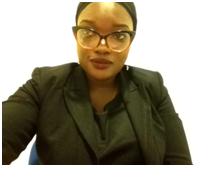
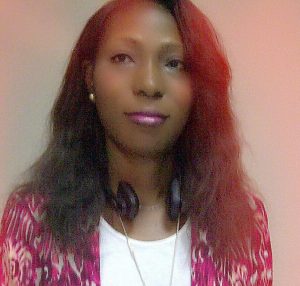
AISHA GAMBARI, LeNNiB Champion, 2017

“The LeNNiB Champions Mentorship programme is a indeed a fantastic opportunity for young persons like me who are passionate about creating an environment to foster better health related quality of life for all humanity.”  – Aisha Gambari

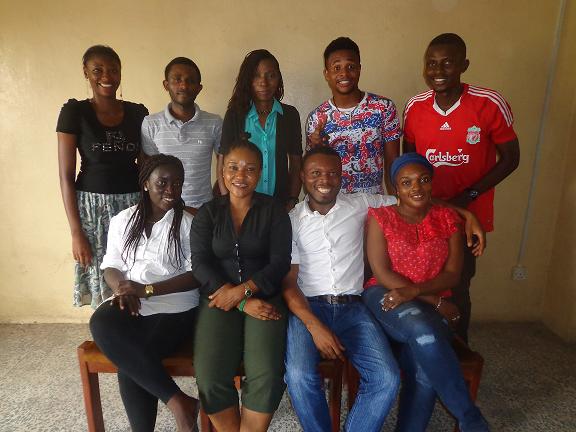
MEET THE FIRST SET OF OUR LeNNiB Champions, 2017

DSC00132


Aisha                                                      AISHA GAMBARI

AISHA is member of the Health Information for All (HIFA) organization. She is the corporate project and research coordinator at Pretty Health Care where help to determine the goals of research projects, research methods and helps with project implementation. She holds a BSc in Human Physiology and a MSc in Public Health. She has worked as a volunteer with several NGOs including being a volunteer for the Local Organizing
Committee of the United Kingdom based Global Health Trials Workshops in Nigeria, and facilitating Global Health Learning for health providers with technical support from USAID. She has also worked in a rural slum as the school health coordinator where she communicates with the health facilities, school health management, parents, and other community resources and agencies to develop improved systems of early case findings and referrals for improved child care. She has also served as graduate tutor and has made presentations and awareness campaigns on HIV and AIDS, breast cancer, Ebola using U-report (mobile phone service that provides up-to-date information on health related outcomes) and WASH.


 BENSON RICHARD BUGOCHUKWU I was born September 5th 1990 and a native of Imo State. I am the 3rd born in a family of four children, a Christian and I love to sing, dance, meet people, eat, crack jokes, travel and have fun. I hate fake people. My favourite colour is purple. My best food is fufu and any nice soup. I'm an O'level holder with certificate in desktop publishing, paralegal and HIV counseling and testing. I currently work with Access to Health and Rights Development Initiative (AHRDI) as the care and support officer. I'm a down to earth person, a very good listener, take correction and can work under pressure with little or no supervision. I love to push myself beyond my limit. I like to be tasked with new things and also love to learn.

                                          BENSON RICHARD UGOCHUKWU
I was born September 5th 1990 and a native of Imo State. I am the 3rd born in a family of four children, a Christian and I love to sing, dance, meet people, eat, crack jokes, travel and have fun. I hate fake people. My favourite colour is purple. My best food is fufu and any nice soup. I’m an O’level holder with certificate in desktop publishing, paralegal and HIV counseling and testing. I currently work with Access to Health and Rights Development Initiative (AHRDI) as the care and support officer. I’m a down to earth person, a very good listener, take correction and can work under pressure with little or no supervision. I love to push myself beyond my limit. I like to be tasked with new things and also love to learn.


Elizabeth Williams Talatu, is a 21 year old native of Kaduna State. She is currently an undergraduate at the University of Lagos, Nigeria pursuing a degree in Accounting. Elizabeth is a member of the Youth Participatory Platform (YPP) of UNFPA Nigeria. She has served as a member of Advocates for youth's Girl Engagement Advisory Board (GEAB), Washington DC; and worked with Action Health Incorporated (AHI) as a Youth Program Assistant where she currently serves as a volunteer. She also works as a volunteer with Youth Empowerment Development Initiative (YEDI) as a "Skillz Girls" coach. Through this work, she has learned how important it is for young people to advocate for sexual health and rights, to participate in policy making of their countries and to have equal access to quality sexuality education and health care

                                             ELIZABETH WILLIAMS TALATU

Elizabeth Williams Talatu, is a 21 year old native of Kaduna State. She is currently an undergraduate at the University of Lagos, Nigeria pursuing a degree in Accounting. Elizabeth is a member of the Youth Participatory Platform (YPP) of UNFPA Nigeria. She has served as a member of Advocates for youth’s Girl Engagement Advisory Board (GEAB), Washington DC; and worked with Action Health Incorporated (AHI) as a Youth Program Assistant where she currently serves as a volunteer. She also works as a volunteer with Youth Empowerment Development Initiative (YEDI) as a “Skillz Girls” coach. Through this work, she has learned how important it is for young people to advocate for sexual health and rights, to participate in policy making of their countries and to have equal access to quality sexuality education and health care


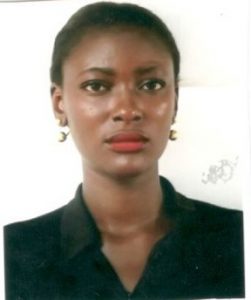
Diana Joseph Edem, hails from Cross River State. She is 35 years old and holds a O' level certificate. She is a member of Nigeria Network of people who use drugs (NNPUD). She is currently the Vice-Chair and an alternate member to Africa with International Network of people who Use Drugs (INPUD). She is a trained counsellor tester and a certified paralegal trainer. Diana was one of the Nigerian delegates who attended the 2016 World AIDS Day in South Africa. She is also a Harm Reduction Advocator. Currently, Diana is the Care and Support Officer for Equal Health and rights Access Advocacy Initiatives (EHRAAI) where she has learned how to work with young persons and Women who use drugs and those who are HIV positive, in order to facilitate access to quality health care.

                                                 DIANA JOSEPH EDEM    

Diana Joseph Edem, hails from Cross River State. She is 35 years old and holds a O’ level certificate. She is a member of Nigeria Network of people who use drugs (NNPUD). She is currently the Vice-Chair and an alternate member to Africa with International Network of people who Use Drugs (INPUD). She is a trained counselor tester and a certified paralegal trainer. Diana was one of the Nigerian delegates who attended the 2016 World AIDS Day in South Africa. She is also a Harm Reduction Advocate. Currently, Diana is the Care and Support Officer for Equal Health and rights Access Advocacy Initiatives (EHRAAI) where she has learned how to work with young persons and Women who use drugs and those who are HIV positive, in order to facilitate access to quality health care.


Frank Eke

                                                           FRANK EKE

Frank Eke, is an indigent of Delta State, Nigeria. He is a graduate of the University of Benin and currently works as a volunteer for Equal Health and Right Access Advocacy Initiative (EHRAAI) as a Strategic Information Officer. He his 32 years old. Frank is a work/goal oriented person and his involved with the various developmental projects He is friendly, gentle and loves to work with persons of diverse opinion


2014-12-06-data centre (1)

                                              OMERE ITOHAN ABIMBOLA

Omere Itohan Abimbola is a Christian and a native of Edo State. She worked as a Customer Service Agent in the service management department of a telecommunication company where she assisted people in resolving their concerns. She has an MBA certificate in Human Relations. Currently Abimbola works with Safehaven Development Initiative as a Program Officer where she educates commercial sex workers on HIV/AIDS and its
preventive measures. She is willing to go the extra mile to help others, and is a team player who is able to work under pressure with little supervision


EGHAGHE OSADEBAMWEN

                                         EGHAGHE OSADEBAMWEN NIBOKUN

Eghaghe Osadebamwen Nibokun hails from Edo State. She graduated from the Department of Botany, University of Lagos, Nigeria. She worked with Young People We Care, Nigeria as an HIV Prevention Outreach Volunteer and with Equal Health Right Access Advocacy Initiative as a Program Associate, Women Health Advocacy.


I am a young innovation, dynamic, hardworking, purpose driving and result oriented graduate of the Department of Library and Information Science, Tai Solarin University of Education. I am very self motivated and accomplish tasks effectively and efficiently. I am always willing to offer a helping hand to individuals and communities in need. I was born on the 18th of March, 1988; a native of Lagos from Lagos Island Local Government. I am dark in complexion, single but blessed with a 4 year old beautiful baby girl called Gabriella I am the 3rd child of four boys, a member of the Red Cross member, a Man O War statesman and a supreme Kegite Club International (SKCI) Senior fellow. I’m addicted to using information technologies and gadget for the sole purpose of information acquisition and dissemination. I have an insatiable urge to learn and to experiment with whatever I am taught. During my NYSC, I participated in the group activities involving advocacy on Malaria, HIV/AIDS and Tuberculosis. Post NYSC, I continued to conduct advocacy and public education programmes in the bid to ensure health behaviour changes resulting from individual and community education.

                                                  OREOFERO OLUWATOBI  

I am a young innovation, dynamic, hardworking, purpose driving and result oriented graduate of the Department of Library and Information Science, Tai Solarin University of Education. I am very self motivated and accomplish tasks effectively and efficiently. I am always willing to offer a helping hand to individuals and communities in need. I was born on the 18th of March, 1988; a native of Lagos from Lagos Island Local Government. I am dark in complexion, single but blessed with a 4 year old beautiful baby girl called Gabriella I am the 3rd child of four boys, a member of the Red Cross member, a Man O War statesman and a supreme Kegite Club International (SKCI) Senior fellow. I’m addicted to using information technologies and gadget for the sole purpose of information acquisition and dissemination. I have an insatiable urge to learn and to experiment with whatever I am taught. During my NYSC, I participated in the group activities involving advocacy on Malaria, HIV/AIDS and Tuberculosis. Post NYSC, I continued to conduct advocacy and public education programmes in the bid to ensure health behaviour changes resulting from individual and community education.


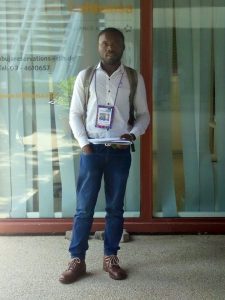
He his 28years old and hails from Edo State though born and brought up in Lagos State. He is the President of Gentle Gents Organization and currently working with Youth Builders Initiative (YBI) as the Administrative Officer. He was opportune to attend the National HIV prevention Conference which held in Abuja 2016. Quadri studied Air Transport at the International College of Aviation and Transport Studies. His hobbies are teaching, putting smiles on people’s faces and learning new things.

                                                      QUADRI RAYMOND

 He his 28 years old and hails from Edo State though born and brought up in Lagos State. He is the President of Gentle Gents Organization and currently working with Youth Builders Initiative (YBI) as the Administrative Officer. He was opportune to attend the National HIV prevention Conference which held in Abuja 2016. Quadri studied Air Transport at the International College of Aviation and Transport Studies. His hobbies are teaching, putting smiles on people’s faces and learning new things.


Orobosa
                                                    OROBOSA ENADEGHE

Orobosa Enadeghe is an epidemiologist, a researcher and an active volunteer in a plethora of non-governmental organisations. He has over 7 years experience in implementing health projects targeted to youth and women in under served rural communities in Nigeria in the area of sexual health, behavioural change communication and maternal and child health. Orobosa is a 2016 Fellow at the Carrington Youth Fellowship Initiative (CYFI) and with grant support from the United State Government, he co-implements ‘AWOYE Initiative’- a maternal and under-5 health intervention to educate pregnant women/caregivers of under-5 children in slum communities to contribute a reduction to death of mothers and under-5 children. He holds an MSc in Epidemiology from the University of Ibadan and a BSc in Microbiology from the University of Port Harcourt.

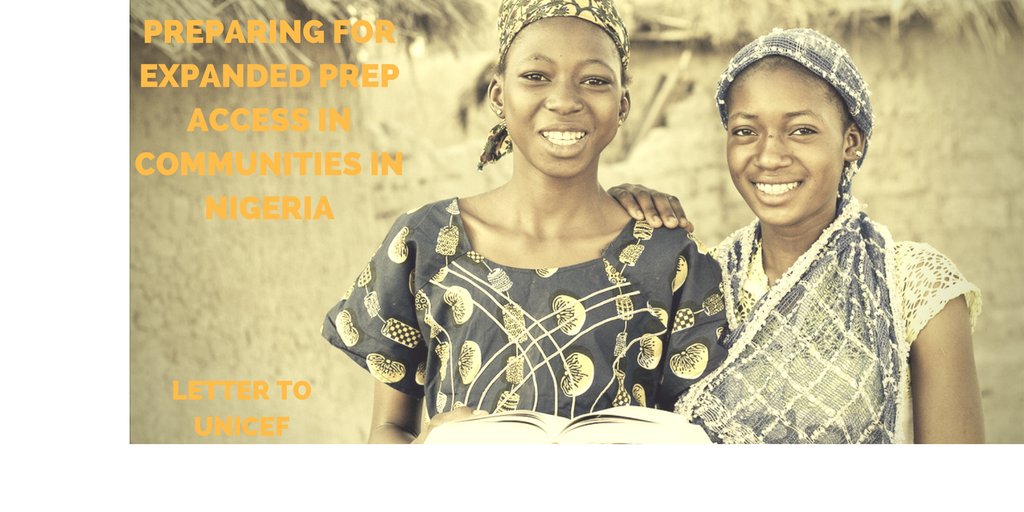
Preparing for Expanded PrEP access in Communities in Nigeria (PEPIC-N): The Prospect for CHILDREN AND adolescents

Preparing for Expanded PrEP access in Communities in Nigeria (PEPIC-N): The Prospect for CHILDREN AND adolescents

The Country Director,

UNICEF

Nigeria

Preparing for Expanded PrEP access in Communities in Nigeria (PEPIC-N): The Prospect for CHILDREN AND adolescents

The New HIV Vaccine and Microbicides Advocacy Society and its partners  recently launched a campaign focused on ensuring no Nigerian is left behind in the HIV response through its Leaving No Nigerian Behind (LeNNiB) campaign. As part of its campaign the team is also launching a project titled Preparing for Expanded PrEP access in Communities in Nigeria (PEPIC-N).

For the PEPIC-N project, we would like to see that communities at substantial risk for HIV infection in Nigeria have access to comprehensive HIV prevention tools to help reduce the risk for HIV infection. This include continued access to quarterly HIV testing, access to risk reduction counseling, prompt diagnosis and treatment of STIs, uninterrupted access to condoms and lubricants and immediate access to antiretroviral therapy.

Our current campaign through the PEPIC-N project is to facilitate the access of populations at substantial risk of HIV infection with whom your organization works – children and adolescents – to existing HIV prevention tools. We also will want you to become accountable to your populations to facilitate their access to PrEP.

We want to believe your organization works in an ethical manner. This should imply that the population and people you work with are not means to an end but end in themselves. If this is an ethical ethos of your work, we would expect UNICEF Nigeria to raise its voice and work towards facilitating access of your target population to PrEP – a proven HIV intervention that reduces the risk of those at substantial risk to HIV infection –

As a group we DEMAND that over the next four years, UNICEF Nigeria provides evidence to show clearly:

  1. A decline in the HIV incidence in the population they work with in Nigeria
  2. Demonstrate that the organization reached 90-90-90 for the population they work with in Nigeria by 2020
  3. Evidence of zero new infection in the population they work with in Nigeria by 2030

Please note that collectively, we as a body of community advocates state that:

  • We DEMAND that UNICEF demonstrates its commitment to the life and welfare of children and adolescents in Nigeria
  • We DEMAND that UNICEF speak up on the need for PrEP for adolescents in Nigeria
  • We DEMAND that UNICEF be accountable to its mandates in Nigeria in respect to children and adolescents by making public its annual targets and report periodically to the public on how well it is meeting its targets.
  • We DEMAND for positive change in the way UNICEF manages the HIV response as it affects children and adolescents in Nigeria
  • We DEMAND that UNICEF conducts research that will help with policy development and programming for PrEP access by adolescents that you serve in Nigeria
  • We DEMAND that UNICEF integrates new biomedical HIV research literacy into its ongoing behavioural change communications with adolescents in Nigeria
  • We DEMAND that UNICEF ensures zero new HIV infections for children born to HIV positive parents in Nigeria

NHVMAS and her partners duly recognise UNICEF’s leadership and the significant roles played in the Nigeria HIV response for the children and adolescents. We do not doubt the sincerity in your efforts to see Nigeria is not left behind. However, we as community actors DEMAND that you do more so that no Nigerian is left behind in race for zero prevent new HIV infections by 2030.

LEAVING NO NIGERIAN BEHIND (LeNNiB)- Letter to Society for Family Health (SFH)

LEAVING NO NIGERIAN BEHIND (LeNNiB)- Letter to Society for Family Health (SFH)

The Chief Executive Officer,

Society for Family Health

Nigeria.

Preparing for Expanded PrEP access in Communities in Nigeria (PEPIC-N): The Prospect for key populations

The New HIV Vaccine and Microbicides Advocacy Society and its partners  recently launched a campaign focused on ensuring no Nigerian is left behind in the HIV response through its Leaving No Nigerian Behind (LeNNiB) campaign. As part of its campaign the team is also launching a project titled Preparing for Expanded PrEP access in Communities in Nigeria (PEPIC-N).

For the PEPIC-N project, we would like to see that communities at substantial risk for HIV infection in Nigeria have access to comprehensive HIV prevention tools to help reduce the risk for HIV infection. This include continued access to quarterly HIV testing, access to risk reduction counseling, prompt diagnosis and treatment of STIs, uninterrupted access to condoms and lubricants and immediate access to antiretroviral therapy.

Our current campaign through the PEPIC-N project is to facilitate the access of populations at substantial risk of HIV infection with whom your organization works – key populations and adolescents – to existing HIV prevention tools. We also will want you to become accountable to your populations to facilitate their access to PrEP.

We want to believe your organization works in an ethical manner. This should imply that the population and people you work with are not means to an end but end in themselves. If this is an ethical ethos of your work, we would expect the Society for Family Health, Nigeria to raise its voice and work towards facilitating access of your target population to PrEP – a proven HIV intervention that reduces the risk of those at substantial risk to HIV infection –

As a group we DEMAND that over the next four years, Society for Family Health Nigeria provides evidence to show clearly:

  1. A decline in the HIV incidence in the population they work with in Nigeria
  2. Demonstrate that the organization reached 90-90-90 for the population they work with in Nigeria by 2020
  3. Evidence of zero new infection in the population they work with in Nigeria by 2030

Please note that collectively, we as a body of community advocates state that:

  • We DEMAND that Society for Family Health demonstrates its commitment to the life and welfare of MSM, FSW and PWID in Nigeria
  • We DEMAND that the Society for Family Health speak up on the need for PrEP for MSM and FSW in Nigeria
  • We DEMAND that Society for Family Health be accountable to its mandates in Nigeria in respect to key population by making public its annual targets and report periodically to the public on how well it is meeting its targets.
  • We DEMAND for positive change in the way the Society for Family Health manages the HIV response as it affects key populations in Nigeria
  • We DEMAND that the Society for Family Health conducts research that will help with policy development and programming for PrEP access by MSM and FSW that you serve in Nigeria
  • We DEMAND that the Society for Family Health integrates new biomedical HIV research literacy into its ongoing behavioural change communications with key populations in Nigeria

NHVMAS and her partners duly recognise the Society for Family Health’s leadership and the significant roles played in the Nigeria HIV response for the children and adolescents. We do not doubt the sincerity in your efforts to see Nigeria is not left behind. However, we as community actors DEMAND that you do more so that no Nigerian is left behind in race for zero prevent new HIV infections by 2030.

LEAVING NO NIGERIAN BEHIND (LeNNiB)- Letter to the World Health Organisation (WHO).

LEAVING NO NIGERIAN BEHIND (LeNNiB)- Letter to the World Health Organisation (WHO).

The Country Director,

WHO,

Nigeria.

LEAVING NO NIGERIAN BEHIND (LeNNiB) CAMPAIGN: WHO PLAN ON PrEP ACCESS FOR PERSONS AT SUBSTANTIAL RISK FOR HIV IN NIGERIA

The New HIV Vaccine and Microbicides Advocacy Society and its partners recently launched a campaign focused on ensuring no Nigerian is left behind in the HIV response through its Leaving No Nigerian Behind (LeNNiB) campaign.

For this campaign, we would like to see that communities at substantial risk for HIV infection in Nigeria have access to comprehensive HIV prevention tools to help reduce the risk for HIV infection. This include continued access to quarterly HIV testing, access to risk reduction counseling, prompt diagnosis and treatment of STIs, uninterrupted access to condoms and lubricants and immediate access to antiretroviral therapy including PrEP access.

Through this campaign, we also like to hold our government, international partners and all other stakeholders   working in the field of HIV response in Nigeria accountable to the populations and community they serve, deliver on their plans for Nigeria and meaningfully engage Nigerians towards meeting the 2020 and 2030 target to end the HIV epidemic globally.

We want to believe your organization works in an ethical manner. This should imply that the population and people you work with are not means to an end but end in themselves. If this is an ethical ethos of your work, we would expect WHO Nigeria to raise its voice and work towards facilitating access of persons at substantial risks for HIV to PrEP – a proven HIV intervention that reduces the risk to HIV infection.

As a group of community advocates we DEMAND  to know WHO Plans and ongoing work on PrEP for persons at substantial risk for HIV infection in Nigeria. We also DEMAND  that over the next four years:

  • WHO Nigeria demonstrates its commitment to the life and welfare of persons at substantial risk of HIV infection in Nigeria.
  • WHO speak up on the need for PrEP access for persons at substantial risks in Nigeria and facilitate policy guideline for delivery of PrEP for persons at substantial risks in Nigeria.
  • WHO be accountable to its mandates in Nigeria in respect to HIV treatment and prevention for persons at substantial risk for HIV infections, and also make public its annual reports on how well it is meeting the Nigeria mandate.

NHVMAS and her partners duly recognize WHO’s leadership and the significant roles played in the Nigeria HIV response for Nigeria at large and persons at substantial risk of  HIV infection specifically. We do not doubt the sincerity in your efforts to see Nigeria is not left behind. However, we as community actors DEMAND that you do more so that no Nigerian is left behind in race for zero new HIV infections by 2030.

Community calls for improved ethical practices in research

Community calls for improved ethical practices in research

COMMUNITY CALLS FOR IMPROVED ETHICAL PRACTICES IN RESEARCH

At the just concluded project organised by the New HIV Vaccine and
Microbicides Advocacy Society (NHVMAS) in collaboration with The
Initiative for Equal Rights (TIER), Christ against Drug Abuse Ministry
(CADAM), Safehaven Development Initiative and International Rectal
Microbicides Advocacy (IRMA) Nigeria, and with funding support from
Sidaction, France, participants specifically requested that the
outcome of the meeting should be widely.

The meeting conveyed members of the community resident in Lagos,Ilesa,
Osogbo, Ife, Ifon in Ogin State, Ibarapa in Ibadan, Jos and members of
vulnerable communities (FSWs,MSM, IDUs, PLHIV) to discuss about
research and how to improve research conducts within these
communities. Also, two  roundtable dialogues that facilitated
discussions between research stakeholders (researchers, bioethicists,
research sponsors, policy makers, journalists, and community members)
were conveyed in June and September 2012 in Lagos and Abuja
respectively also.

The following were the objectives of the meeting:
(i) to identify priorities considerations by research communities when
HIV research is conducted in their community
(ii) identify considerations that should be of concern to ethics
committees during protocol review
(iii) identify measures to take to empower communities to become more
directly engaged with HIV treatment and prevention research conducted
within their communities.

The community made several observations with respect to informed
consent process, community engagement in research and standard of care
in research. Please find attached the summary of the outcome of the
meetings. Some of the findings and recommendations are enumerated
below:

1.0 Informed consent and other ethical considerations in research
•      Ethics committees do not provide proper oversight function for
the researches they approve.
•      Negotiation of research reimbursements often takes place at
the time of research implementation.
•      Poor information dissemination about the research to the
research community and individuals involved with a research.

2.0. Community engagement in research
•      There is little research literacy efforts on the field.
Communities therefore only respond to what researchers share with
them.
•      CSO engagement is often mistaken for community engagement.
•      Ethics committees do not monitor researches they approve to
ensure that community engagement happens in the field.

3.0.    Concern on standard of care
•      Some research participants in hospital based research are made
to bear the cost of research related investigations.
•      Study participants may be asked to defray the cost of
managingchronic illnesses that develop during the course of
implementing
researches with long duration the onset of which researchers consider
not to study related.

4.0.    Other concerns
•      There is minimal government investment in HIV research
conducted in Nigeria.
•      A number of HIV researches are repeated due to poor
coordination of the field.
•      Often, researches do not inform intervention and policy formulation

B. RECOMMENDATION
• Informed consent form should be available in local languages for
easy understanding. Verbal translation of English to local language is
not acceptable.

• Ethics committees should monitor all the researches they approve
including monitoring of the informed consent process. The community
considers it unethical not to do so. The current level of research
monitoring is extremely low and very unacceptable. This gives room for
research participants’ abuse. Unfortunately the vulnerable – including
those that do not understand their rights when it comes to research –
are preys to multiple unethical practices including paying for
research related investigations in disguise for treatment.

• Community engagement should happen throughout the lifecycle of
research – from the design to the dissemination stage in line with the
requirements of national ethics code and national HIV research policy.

• NGOs need to be funded to actively support community research
literacy so as to promote informed community engagement with research.
Researchers are encouraged to engage CSOs in all community based
research as community educators. This would encourage mutual trust for
the research and sustained community education on the subject matter
even after the project is concluded.

• CSO engagement should not be considered as community engagement.
Researchers should work with CSO as gatekeepers only: discussion and
recruitment of research participants should be done directly from the
community after duly providing information to the community.

• All research should make effort to promote research literacy. Ethics
committees should see that the information sheet for all the research
they approve should have an educational component. This way, at the
minimum, research participants get to learn something about the
research subject.

• The  standard of care package for research participants should align
with global standards.

• Researchers should make significant efforts to facilitate mechanisms
that will increase the translation of their research findings to
policies and programmes.