INTERNATIONAL WOMEN’S DAY: NHVMAS press for changes in adolescents sexual and reproductive health and rights practices in Nigeria
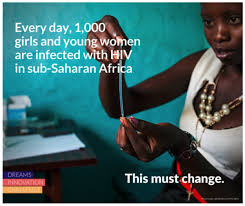
March 8th, 2018: The New HIV Vaccine and Microbicide Advocacy Society (NHVMAS) joins the world in commemorating the International Women’s Day. We call on all stakeholders in Nigeria engaged with family planning, sexual and reproductive health and rights, and HIV and AIDS response to join forces to press for change in the way adolescents’ sexual and reproductive health and right is managed.
We amplify the #MeToo campaign against all forms of sexual harassment and sexual violence against women and female adolescents. We are aware that female adolescents are disproportionately affected by many forms of sexual harassment and sexual violence including forced sexual initiation.
It is disheartening the result of a study conducted in Nigeria that showed that as high as 31.4% of sexually active females adolescents had experienced forced sexual initiation [1]. Another study highlighted that 22% of cases of forced sexual initiation occur before the age of 13 years [2].Sadly, those adolescents who were HIV positive were more likely to have experienced forced sexual initiation when compared with adolescents who were HIV negative. Rape, is a risk factor for HIV infection in Nigeria.
Also, adolescents in Nigeria with a history of forced sex initiation were more likely to engage in unprotected anal sex and in transactional sex They also were more likely to adopt mental and emotional avoidance strategies and religion to cope with the stress of rape due to negative labelling and stigma of rape survivors [2].
Ongoing studies on biomedical HIV prevention tools for use in adolescents are also not encouraging. Adherence to use of HIV prevention tools – including the use of male and female condoms, Pre-exposure prophylaxis, and the vaginal ring that prevents sexual transmission of HIV infection through the vagina – has been poor for adolescents for many reasons. This does not preclude the need for these tools by adolescents. Adolescents are a lot more concerned about pregnancy than HIV. Yet, the risk of rape increases their risk for both pregnancy and HIV infection.
NHVMAS CALL FOR ACTION
1. Public and private institutions/organisations in the Nigeria – including schools and offices – should develop and make public its zero tolerance policy on sexual harassment. Such policies should create an open platform or the reporting of harassments and abuse of authority or unethical behavior in these institutions/organisations.
2. The National Agency for the Control of AIDS in Nigeria should officially recognize rape as a risk factor for HIV infection in females in Nigeria. Structural prevention and treatment interventions to address the growing menace of rape is needed as an integral component of the HIV and AIDS response for adolescents in Nigeria
3. Adolescent friendly centres should include rape prevention strategies in their training programmes for all adolescents. These strategies should not exclude the provision of safe spaces for the provision of abortion for girls (many girls become pregnant from rape). We therefore denounce the global gag rule that pushes to silence organisations that provide abortion counselling or referrals, advocates to decriminalize abortion or expand abortion services to address the needs of adolescents.
4. We also ask for continued global investment in research and development of multipurpose technologies that reduces the risk of female adolescents to pregnancy, sexually transmitted infection and HIV infection.
Vaginal Microbiome May Influence Effectiveness of Pre-Exposure Prophylaxis
Kristi Rosa
7 March 2018
Over 1 million women are infected with HIV on an annual basis. In order to reduce this number, more understanding is needed. Even after all of this time, not much is known about the biological mechanisms that lead to HIV acquisition in this population.
This lack of knowledge was addressed in the Tuesday Plenary of the 25th Conference on Retroviruses and Opportunistic Infections, during which Nichole Klatt, PhD, from the University of Washington, provided an overview of what is known about vaginal microbial dysbiosis and its association with HIV infection as well as how vaginal bacteria may influence transmission in women.
“Over 50% of new infections occur in women,” Dr. Klatt stressed. “Every minute, 2 women are infected with HIV worldwide, which means that during my 25-minute talk, 50 women might be infected with HIV.”
Women face several challenges in the fight against HIV. First, they tend to get infected at younger ages; women between the ages of 15 and 24 who are living in Sub-Saharan Africa are 2 times more likely to get infected with the virus compared with their male counterparts. Women also have to worry about mother-to-child transmission of the virus. Those living in underdeveloped countries are faced with even more obstacles when it comes to prevention, as they lack sexual protection rights in an environment rife with sexual violence. However, the particular challenge that Dr. Klatt chose to address was a lack of understanding of how biological mechanisms influence transmission for the female reproductive tract.
Other factors that are typically associated with HIV transmission in have already been studied, including the role of a damaged epithelial barrier (associated with inflammation), neutrophil infiltration, and, the focus of Dr. Klatt’s presentation, an altered microbiome.
“The microbiome is the microorganisms in an environment. There are 10 to 100 trillion microorganisms in each person and a good anecdote that I like to give is that every adult has approximately 5 to 10 pounds of bacteria in the gastrointestinal tract,” Dr. Klatt explained. “However, while we think of the microbiome as bacteria, it’s not just bacteria, as it also includes things like viruses, fungi, protists, and archea. Also, when we talk about the microbiome it’s not just the actual microogranisms; it’s the genes that they have, the metabolites they make, and the other biproducts that they may have made.”
Although the most well-known microbiome is arguably the gut microbiome, Dr. Klatt zeroed in on the vaginal microbiome and how dysbiosis, which is highly associated with disease, could affect HIV transmission.
“A good microbiome, or a healthy microbiome, per say, would be Lactobacillus dominant. When we [look at] the single bacteria Lactobacillus, it’s a very low pH and it seems to be very protective,” explained Dr. Klatt. “However, when we see this dysbiosis, we see a dominance of polymicrobial, mostly anaerobic bacteria; this is associated with increased pH, inflammation, and barrier damage, and it has been associated with transmission of several sexually transmitted infections.” Essentially, the more diverse the microbiome is, the more anaerobes there are, and thus, the more dysbiotic it is.
The clinical diagnosis for microbiome dysbiosis is bacterial vaginosis (BV), which is detected by 1 of 2 tests: the Nugent score and Amsel’s criteria. Dr. Klatt stressed that, “having a clinical diagnosis of BV does not necessarily mean that there is microbial dysbiosis, and having a microbial dysbiosis does not necessarily mean that that woman is clinically BV-positive.”
The vaginal microbiome also varies across ethnicities. One study Dr. Klatt highlighted indicated that more Lactobacillus in the microbiome has been found in white women, whereas other ethnicities, such as black and Hispanic, proved to have much more diverse dysbiotic communities. “This is why I hesitate and I kind of use quotes when I say ‘healthy’ or ‘good’ [microbiome] because we don’t really know,” she admitted. “Many women around the world have dysbiosis or these highly diverse communities, and so it may not necessarily be a bad thing; however, for HIV transmission it does seem to play a role.”
Past research has shown that increased vaginal dysbiosis is highly prevalent in areas where rates of HIV infection in women are high. Dr. Klatt highlighted the differences seen in women’s microbiomes between Sub-Saharan Africa and North America to illustrate this point. In Sub-Saharan Africa, where HIV prevalence is especially high, much less Lactobacillus is seen in the microbiome than dysbiosis, whereas in North America it is the exact opposite.
“This becomes very important as vaginal dysbiosis and BV status can increase HIV infection risk,” she stressed. She highlighted 1 study that found that in a group of in which healthy Lactobacillus was present, there was no HIV infection risk, but as microbiome diversity increased, HIV risk also went up. Furthermore, the study results showed an increase in HIV infections in women with BV. “It’s not just that women who have BV are at higher risk of HIV infection, but also, a man sleeping with a woman who has BV has a higher risk of HIV infection,” she said. “There’s also a higher risk of mother-to-child transmission with a woman who has BV, and so, it’s an important problem and it’s something that we have to understand better.”
Therefore, researchers are working to identify what the mechanisms are by which vaginal microbial dysbiosis increases HIV transmission. Some of these might include: Inflammation. It is known the inflammation is associated with HIV; vaginal microbial dysbiosis is also associated with inflammation.
Reduced epithelial barrier integrity due to dysbiotic vaginal bacteria.
Dr. Klatt encouraged researchers to take this understanding a step further to answer the question: Why might the vaginal microbiome affect the effectiveness of different clinical trials, such as those focusing on pre-exposure prophylaxis (PrEP)?
Although PrEP has proved to be about 80% to 90% effective in men, the range of effectiveness is much broader in women, anywhere from -50% to 75% effective. Although many of the variations noted in trials have been associated with adherence, Dr. Klatt suggested that biological factors may be influencing the effectiveness as well.
To study the influence of biological factors, Dr. Klatt and her team reviewed the results of the CAPRISA 004 trial, which studied the influence of a topical microbicide on tenofovir gel PrEP. The investigators found that the gel was 39% effective in reducing HIV infection in women. When looking at microbiome data, splitting the women into 2 groups (1 dysbiotic with Gardnerella dominance and the other with Lactobacillus dominance), the effectiveness of the PrEP changed among the groups.
“What was really striking was that if you split these women up into Lactobacillus dominant versus non-Lactobacillus groups, suddenly the efficacy changed. Women with Lactobacillus in the vagina had an efficacy of 61% instead of 39%, and so the efficacy goes up,” she explained. “However, if you do not have Lactobacillus dominance of the vagina, your efficacy for tenofovir gel actually goes down to 18%, and so, this was quite striking. We wanted to understand why the microbiome could be affecting the actual efficacy of the drug like this.”
The team created an assay to study this, which, after some alterations, found a direct correlation between infection rates in cells and the rate of degradation. “This indicates that the Gardnerelladysbioticbacteria infection actually enhanced HIV infection probably by metabolizing the tenofovir before it could actually affect the target cell,” Dr. Klatt explained. Subsequent research looked at other PrEP drugs such as dapivirine and next-generation tenofoviralfademine (TAF). For dapivirine, they found “a significant negative association between how much Lactobacillus is in each sample and the rate of degradation of dapivirine,” which could “potentially explain some of the differences of efficacy in women that were in the dapivirine trials.”
No differences in diversity were found with TAF and there was no TAF degradation.
“Dysbiosis of vaginal bacteria is a key factor in vaginal inflammation, epithelial barrier integrity, and HIV acquisition. Dysbiotic bacteria can metabolize the PrEP drugs tenofovir and dapivirine and potentially contribute to decreased PrEP efficacy in vivo,” Dr. Klatt concluded. “Importantly, TAF is not degraded by vaginal bacteria and so, this makes considerations for more efficacious PrEP and we are also trying to assess other drugs and determine which drugs are the least metabolizable for the bacteria.”’
Her research underscores the need to better understand the role of the vaginal microbiome in HIV and highlights the need to find a way to increase Lactobacillus communities to prevent BV as well as dysbiosis recurrence; this is crucial for improving drug efficacy.

By Olumide Olukayode,
Akin Abayomi, a Nigerian globally-respected Professor of Medicine with sub-specialization in environmental health and pathology, has charged African governments and philanthropists to wake up from their slumber and fund useful research that will lead to the advancement of the continent.
Abayomi spoke Tuesday at the
2018 Nigeria Global Health Conference themed “Collaborations, Networks and Partnerships for Health Research Conduct in Nigeria,’ holding at the National Sickle Cell Centre, at Idi Araba, Surulere, Lagos.
The ongoing conference, of which POSTERITY MEDIA, is the official media partner, has hundreds of participants which include medical researchers, doctors, laboratory scientists, academics and other stakeholders in the health and science community, in attendance.
Speaking during his keynote address, Professor Abayomi, who has been a principal investigator on numerous medical capacity development projects funded by the World Bank, National Institute of Health, Wellcome Trust, Gates Foundation and European Union, said Africa must no longer solely rely on research funding from outside the continent for its development.
Pointing that the fourth industrial revolution which is the knowledge economy has already started, he emphasized that Nigeria and Africa can still leapfrog the process if money is invested into research and development now.
“One of the biggest funders of research worldwide and in Africa is Bill Gates. We have a large number of billionaires in Africa. It’s time for them to wake up and fund research that will advance the continent,” Abayomi said.
The professor added that those in the medical community particularly need to spearhead the effort. “We need to come together as scientists in Africa and engage more with philanthropic members of our communities. Like Bill Gates is doing, we also need to engage them to do same although that doesn’t in any way take away the responsibility of government. The governments of Africa must put money into research and development. As members of the health and science community, we can lead the efforts to engage them to do that,” the professor further said.
Abayomi, however, pointed out that such engagement must be done the right way through providing government and the well-to-do members of the community useful data that will help them to make informed decisions on why it is urgent to take the needed steps.
“What is the amount governments in Europe are spending on research every year? What is happening in America? What are they spending money on? And what is the level of local funding we are putting into research and development? We have to put all these together to engage them. We must force our governments and our philanthropists to do what they have to do so we can get the result we want to get as a country and as a continent,” the Professor said.
Abayomi’s highly-engaging and well-received keynote address which evidently went beyond the confines of medicine or health research, took participants down memory lane on the history of Africa and how slave trade, colonialism, neocolonialism and corruption have all combined to place the continent on a pedestal of inequality.
He also touched on the environment and types of research needed by Africa now which scientists on the continent must take on.
Before concluding his presentation, he pointed out that the challenges of the continent can be fixed when global health practitioners in Nigeria and Africa work together to ensure that the right political leadership and policies are in place towards providing a better society for citizens and bequeathing a better continent for African children.
At the just-concluded 2018 Partners Forum that held from February 13 -15, 2018 at the Crowne Plaza, Johannesburg, South Africa, participants were taken through an Advocacy 001 class. The lecture sounded very much like what advocacy should be – planned, with timelines and targets, adequately funded with measureable targets. Sadly, the history of HIV and AIDS activism in Africa was not such structured campaigns.
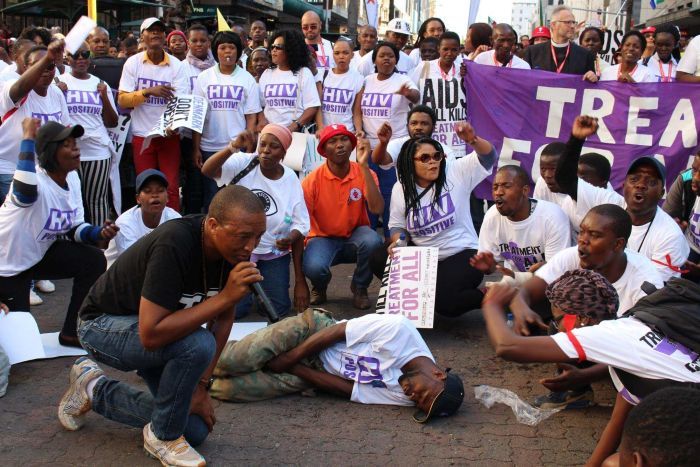
HIV and AIDS activism evolved out of a desperate need to save lives. Usually, activists were challenging the draconic actions of big corporations and their own governments. A good case study for AIDS activism in Africa is the Treatment Action Campaign (TAC) in South Africa.
TAC sued and forced the South African government to roll out Nevirapine to prevent mother to child HIV transmission. In 2001, TAC supported the government against Pharmaceutical Manufacturers Association to preserve the Medicines Act of 1997. One year later, there was the campaign for civil disobedience to force treatment roll out for all people with HIV.
TAC’s actions were not spurred by approved proposals, or influenced by donor funding!
Communities were educated, local resources galvanized, and alliances formed with health care providers, religious leaders, trade unions and other civil society groups. TAC’s actions succeeded due to the social power they mustered; they did not mobilize because they had access to grants and foreign funded action plans.
TAC’s decision-making and action planning happened in the field; protests, matches, and pressure forming actions were taken. Journalists wrote reports, financial support followed their successful fights, the world heard about them, but more importantly, the South African government listened.
The movement for antiretroviral access in
Nigeria also had a similar history.
People living with HIV took their fate in their hands. Without grants, foreign donations, the time to write proposals or skills to draw charts, the people coalesced to put pressure on the government to ensure access of antiretroviral drugs for Nigerians.
Nigerian AIDS activists taught journalists, doctors and community members the advocacy skills they learned from sister campaigns. A few quiet pioneers searched for, and modestly supported activists before the advent of big money like PEPFAR and the Global Fund. Nigerian activists seized a most critical time in history to take action – the 2005 International Conference on AIDS and STI in Africa (ICASA) which held in Abuja.
There was a movement in 2004/2005 by civil society organizations in Cambodia, Cameroon, Nigeria and Thailand, to end the conduct of a trial considered unethical by community members. The action started spontaneously – people identified a risk for their communities, they spoke up, and then mobilized themselves for action when their voices were not heard.
That movement led to the termination of the HIVprevention studies – the tenofovir trials – in Cambodia and Cameroon and a modification of the study implementation in Thailand. There were no grants to fund the movement. There are multiple other histories of HIV and AIDS activism in Africa – small, medium and big movements – that have led to landmark changes in HIV response. These activisms have pushed for recognition of the rights of individuals, populations and citizens. The victories won were the satisfactions gained by activists.
As young activists now receive classroom training on how to design, plan, implement and monitor activism with timelines, we hope the heat and heart is preserved. As they access large grants and funding for proposal writing, may we remember to teach them that activism is not run by grants, but by people.
Engaging, educating, mobilizing, and empowering people to challenge their governments, donors, allies and funders is the secret to the AIDS activism that brought change in Africa. Activism requires twenty percent money and one hundred percent angry and passionate people to disrupt unstructured governance systems on the continent.
HIV and AIDS activism for change in Africa depends on garnishing people power and not money power. It results from a collective belief in the good the population will receive because of our communitarian nature as Africans. We are organically driven, we evolve organically and our financial resources for action are marshaled on the field as our movements evolve. We often lack resources, but our movements do not die because they lack resources. Actions die in Africa when the people power is lost.
Folayan is of New HIV Vaccine and Microbicide Advocacy Society (NHVMAS)
Odetoyinbo is of Positive Action for Treatment Access (PATA).